See how time passes differently in deep space
Voyager 1 and 2 have been travelling through space since 1977 and are now far beyond the planets. According to Einstein’s theories of special and general relativity, their enormous distance from the Sun and their motion through the Solar System affect the rate at which time passes aboard them. Voyager Relativity follows both spacecraft using current trajectory data and shows, in real time, how special and general relativity make time pass differently for them than on Earth.
Voyager 1
Launched in 1977, Voyager 1 flew past Jupiter and Saturn before continuing outward toward interstellar space. It is now the most distant human-made object from Earth and is still returning scientific data.
- Distance from Earth
- 25,738,242,378 km · 172.05 AU
- Distance from Sun
- 25,708,329,442 km · 171.85 AU
- Heliocentric speed
- 16.918 km/s
- One-way signal time
- 23 h 51 min
- Solar gravity
- 0.000000201 m/s²
- Earth orbital speed
- 29.676 km/s
Relativistic time dilation
Time gained relative to Earth
At its present location and speed, an ideal clock travelling with Voyager 1 would run about 1.191 ms faster per day than a comparable clock on Earth.
Weak-field model: solar potential, Earth's surface potential, and heliocentric motion, referenced to an ideal non-rotating clock at mean Earth radius. The historical integration also includes Earth's and the giant planets' potentials at the spacecraft. Earth rotation, smaller bodies, and higher-order terms are excluded.
Accumulated clock difference since launch
About this spacecraft
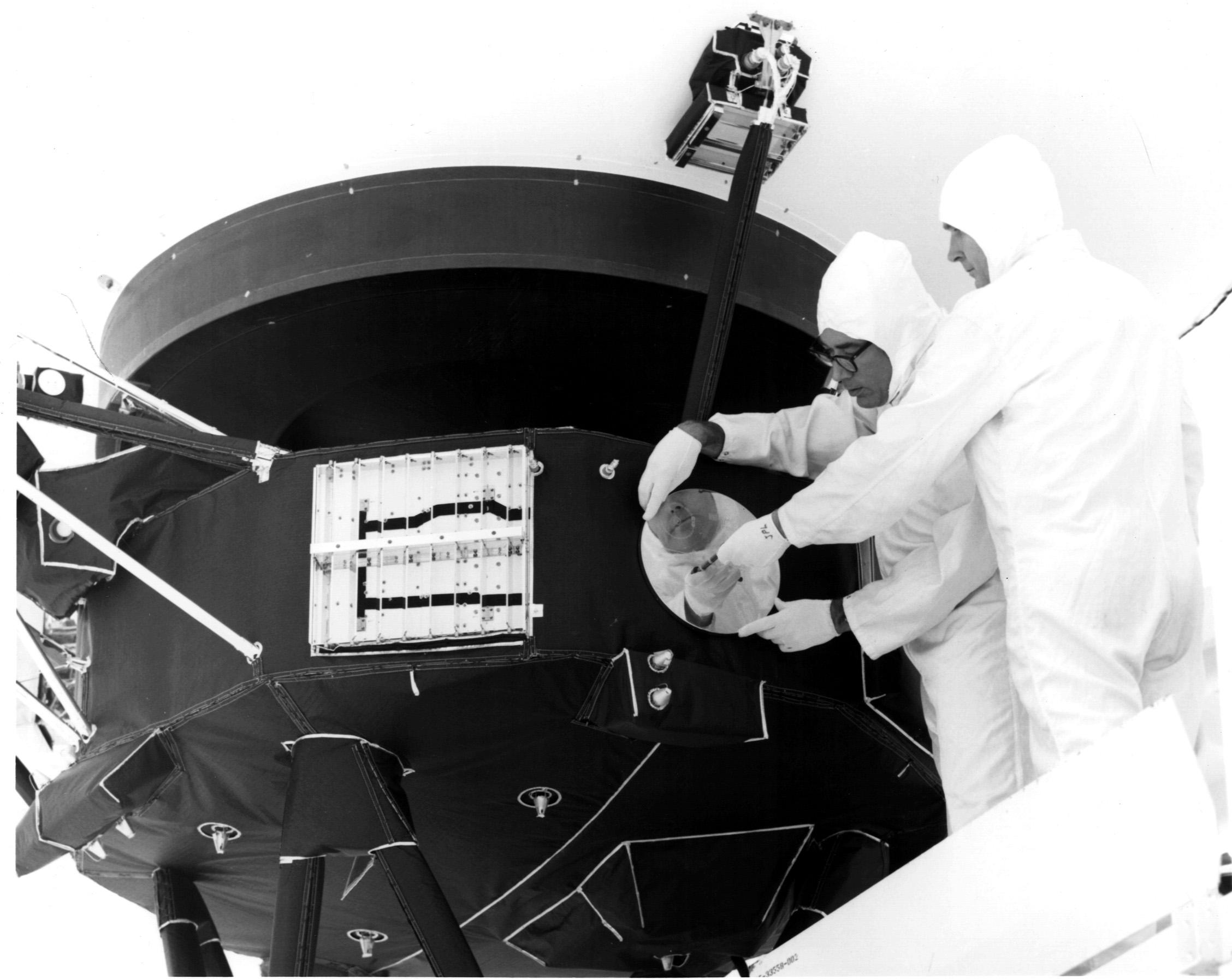
- Spacecraft
- Voyager 1
- Mission
- NASA / JPL
- Launched
- September 5, 1977
- Launch vehicle
- Titan IIIE-Centaur
- Launch mass
- 815 kg
- Power source
- 3 radioisotope thermoelectric generators
- Planetary encounters
- Jupiter & Saturn
- Entered interstellar space
- August 25, 2012